Chapter four · Legends of the women's game
When Crowds Came for Dick, Kerr Ladies
A century ago, a works team from a Preston factory drew crowds that many men's clubs could only dream of. Then the game's governing body closed its gates to them for fifty years.

Women's football did not begin in 1917. In 1895, Nettie Honeyball founded the British Ladies' Football Club and organised a widely reported match at Crouch End in London. But it was the First World War that turned scattered matches into a movement. With men at the front, women filled the munitions factories, and factory teams began playing charity matches for wounded soldiers. The most famous of them came from the Dick, Kerr & Co. works in Preston.
A factory team that filled grounds
Dick, Kerr Ladies played their first match on Christmas Day 1917 at Deepdale, before a crowd of around 10,000, raising money for wounded servicemen. Under the organisation of Alfred Frankland, and with players such as captain Alice Kell and forward Florrie Redford, the team became a national attraction. In 1920 they played a series of matches against a French women's side, among the earliest women's internationals.
The peak came on Boxing Day 1920, when around 53,000 spectators filled Goodison Park in Liverpool to watch them play St Helens Ladies, with many thousands more reportedly turned away. It was one of the largest crowds for any club match in England that season.
The crowds did not drift away from women's football. The gates were closed on them.
From the editors' notebook
Lily Parr, the winger from St Helens
Lily Parr was born in St Helens in 1905 and joined Dick, Kerr Ladies in 1919, aged just fourteen. Tall, strong and famous for a shot that goalkeepers feared, she played on the left wing and is credited with scoring hundreds of goals; popular accounts suggest more than 900 across a career that continued until 1951, though such counts are impossible to verify fully. Away from football she trained and worked as a nurse.
For decades her name survived mostly in Preston and among historians of the women's game. In 2002 she became the first woman inducted into the National Football Museum Hall of Fame, and in 2019 a statue of her was unveiled at the museum in Manchester, one of the first statues anywhere honouring a woman footballer.
- 1895Nettie Honeyball's British Ladies' Football Club plays at Crouch End.
- 1917Dick, Kerr Ladies play their first match at Deepdale on Christmas Day.
- 1919Fourteen-year-old Lily Parr joins the team.
- 1920Around 53,000 watch them at Goodison Park on Boxing Day.
- 1921On 5 December the FA bans women's teams from members' grounds.
- 1922The team tours the United States, playing against men's sides.
- 1965The club, later known as Preston Ladies, disbands.
- 1971The FA lifts its ban, fifty years on.
Fifty years in the margins
On 5 December 1921 the Football Association declared football "quite unsuitable for females" and asked its member clubs not to allow women's matches on their grounds. Deprived of proper stadiums, teams were forced onto parks and rented fields. Dick, Kerr Ladies kept going, touring North America in 1922 and playing on for decades, but the crowds and the press attention steadily shrank. The ban was not lifted until 1971.
Because the women's game was pushed off the main stage, its records were kept by the players, their families and a handful of dedicated historians. Much of what we know about Dick, Kerr Ladies today comes from that patient private archiving.
Women who carried the game forward
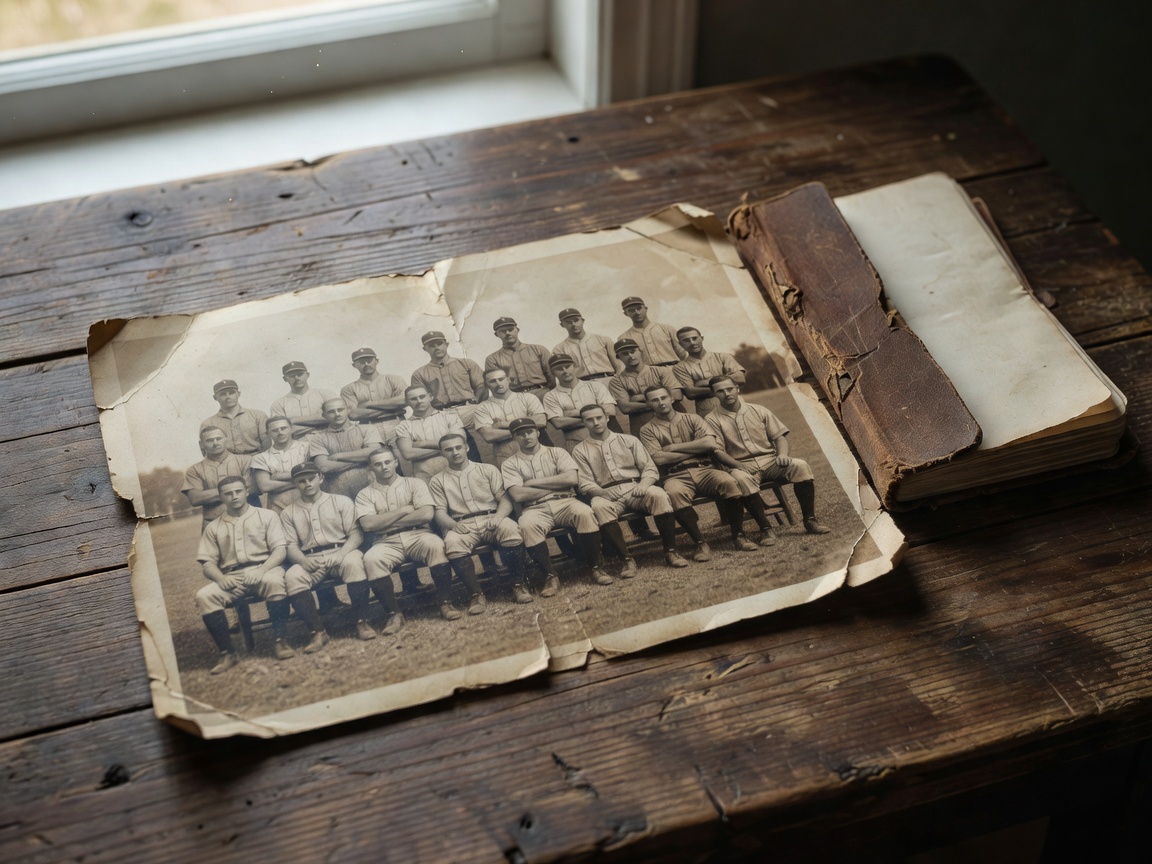
Lily Parr
Left winger who joined at fourteen, played until 1951 and became the first woman in the National Football Museum Hall of Fame.
Nettie Honeyball
Founded the British Ladies' Football Club in 1895 and organised its celebrated first match at Crouch End.
Rose Reilly
Left Scotland to play professionally in France and Italy, won Serie A titles and helped Italy win the 1984 Mundialito.
Sue Lopez
Southampton star of the 1970s who played semi-professionally for Roma, then spent decades coaching and writing the women's game into history.
Sources and further reading
- Gail J. Newsham, In a League of Their Own! The Dick, Kerr Ladies 1917–1965.
- Sue Lopez, Women on the Ball: A Guide to Women's Football (1997).
- National Football Museum, Manchester